
Artificial Intelligence, Spellcheck, and the Perfect Rumba!


A friend of mine recently asked, “Do you use A.I. when you write your articles?”The answer? Simply—yes!Yup. Guilty! Lock me up and throw me in the Spellcheck slammer.
But really, why wouldn’t I use it? I also use spellcheck because, let’s be honest, I don’t want to subject you, dear reader, to a horror show of fragmented sentences and “creative” spelling. You deserve better.
A.I. is a wonderful tool, and I’ve learned that it’s not about if you use it, but how you use it. That’s where the magic happens. It’s the same reason I love using it when writing my articles—it’s like having a dance partner who never gets tired or steps on your toes.
Here’s my A.I.-assisted writing process tips:
Write First, Worry Later:
I write the entire article from top to bottom in one go. I let the words fly like a Cha-Cha on espresso (that's and A.I. joke!). I don’t stress about how it looks, how long it is, or whether it’s readable. That part comes later. This way, my brain doesn’t get interrupted by spelling errors or paragraph trimming every three seconds. It’s a stream of consciousness... with jazz hands.
Time for the Robots:
I then ask A.I. to edit the article. I’ll tell it to clean up the flow, maybe add a touch of seriousness or sprinkle in a little humor (like this!). A.I. helps give my writing rhythm and clarity—basically, it’s my literary metronome.
Human Rehearsal:
Now it's my turn to edit. I re-read the article through your eyes. Is it too long? Did I lose the point somewhere between paragraph 3 and a tangent about salsa shoes? Is it still me, or did A.I. get a little too clever with the punchlines?
Final Polish:
I’ll make some last-minute tweaks—maybe add a paragraph, delete a sentence that was trying way too hard to be funny, or rearrange a section. Then, I read it from top to bottom one more time. Coffee is usually involved at this point.
Lights, Camera, Send!
I might throw in a photo or two (because we all love a good dramatic dance pose) and then I send it to the fabulous WDSN team for final feedback.
This is the formula that works for me. Honestly, it’s not all that different from how we approach choreography and music.
As choreographers, we seek inspiration—watching other performers, borrowing movements we love, and then customizing the choreography to fit a couple’s style. We edit music just the same way—snipping, tweaking, and adjusting until it matches the tempo and level of the dancers, whether they’re newcomers or pros.
Music Directors go through a similar process. Imagine if they could only play songs they composed themselves. The entire comp would be over in 20 minutes and probably feature an awkward remix of “Happy Birthday” and elevator jazz. Instead, they carefully curate songs, adjust speed and feel, and make sure everything matches the level and vibe of the dancers. It’s an art—and a science.
And just like with choreography or music, the worst thing you can do with A.I. is give it no direction.
If I simply say, “Hey A.I., write a thank-you letter to my customers,” I’ll get something that sounds like it was written by a very polite toaster.Or, if I say, “Write the next great American novel about Ballroom Dancing,” it might churn out a story involving talking sequins, a time-traveling tango, and someone named Fabio who only speaks in rhymes.
Bottom line: A.I. is a tool, not a replacement. You have to guide it, shape it, and keep it in check—just like you would a dancer who suddenly decides to freestyle during the Viennese Waltz.
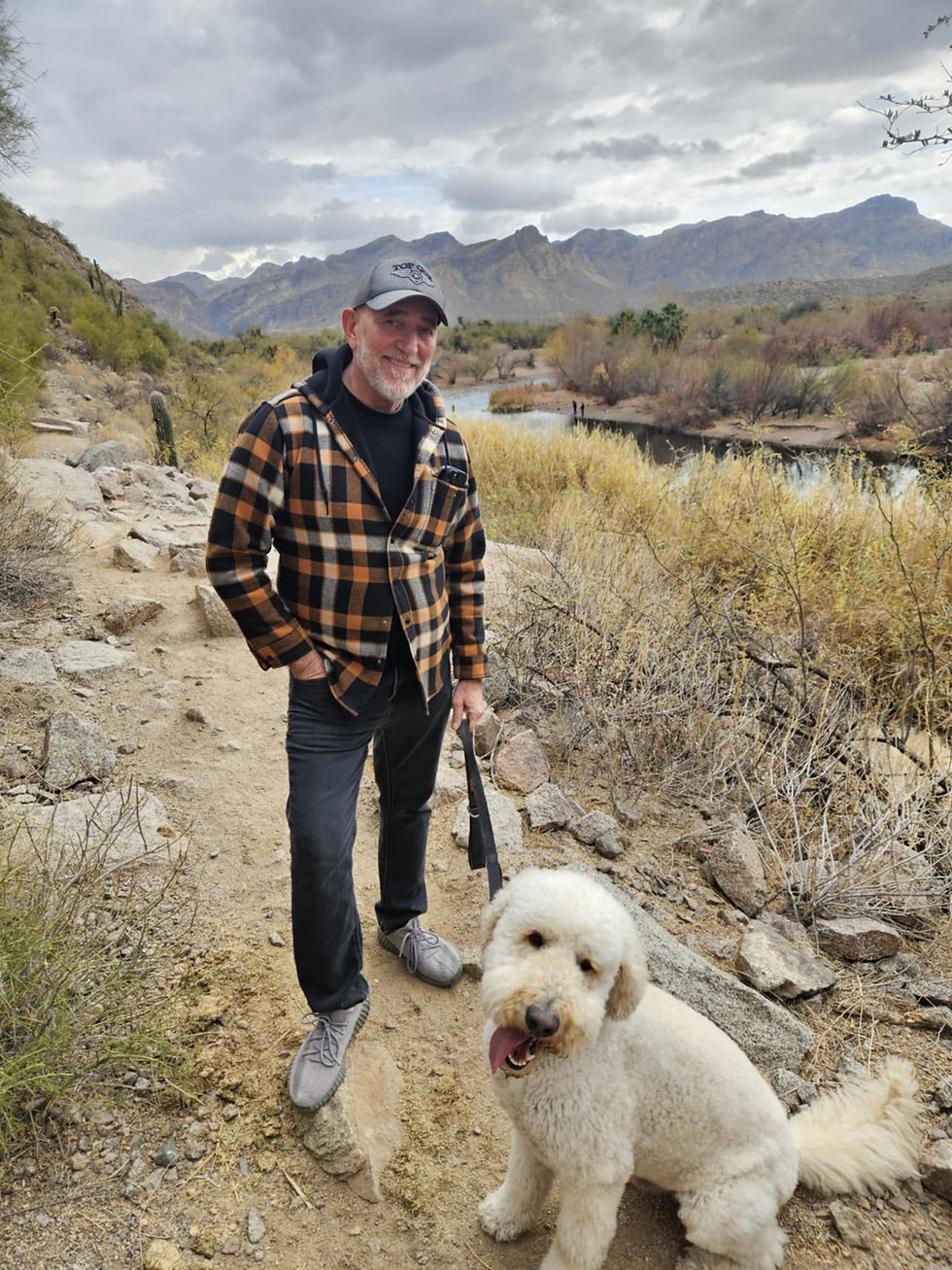
P.S. Me and Chewy? We’re the real deal. No A.I. editing needed.
(Although I’m pretty sure Chewy does use A.I. to find the best snacks.)


Comments